


Training Program & Compliance SaaS for Aviation Maintenance Schools
Hour allocation, EASA Part-147 compliance validation and instructor sign-off for AMTOs
Visit websiteExpertise
 Web applications
Client

Total Training Support Ltd (UK)
Client testimonial
Over the past 25 years, we’ve worked with numerous IT companies and freelance developers on our web applications and software projects. Our experience has ranged from excellent to deeply disappointing. We decided to switch the development of one of our key applications to Outsourcify after a change in project…


See all testimonialsOver the past 25 years, we’ve worked with numerous IT companies and freelance developers on our web applications and software projects. Our experience has ranged from excellent to deeply disappointing. We decided to switch the development of one of our key applications to Outsourcify after a change in project…
147 Manager is a cloud-based B2B SaaS platform for Approved Maintenance Training Organizations (AMTOs) — the schools that train aircraft maintenance engineers under EASA Part-147 and Part-66 regulations. Built for Total Training Support Ltd alongside its exam and e-learning platforms, Outsourcify designs and develops the platform end to end: multi-tenant architecture, curriculum templates, hour allocation and audit-ready compliance documents. Phase 1, the core Hour Manager, is in active development — Sprint 3 was completed in June 2026 and Sprint 4 (Hour Allocation) is ongoing.
Results
Challenge
Aviation maintenance schools plan multi-year training programs whose every hour must satisfy strict regulatory arithmetic: basic training must total at least 2,400 hours, with theoretical teaching representing 50 to 60% of the whole. Curricula follow rigid official structures — EASA Modules 1 to 17 for basic training, ATA chapters 00–85 for aircraft type training — yet each school needs the freedom to split modules into variants like 7A/7B, hide irrelevant ones and work under its own authority (EASA, UK CAA, CAAT or CAAS). Managed in paper binders and spreadsheets, this makes government audits slow and error-prone, and hour totals can drift out of compliance unnoticed.
Solution
We are building 147 Manager as a secure multi-tenant web application on a Nuxt/Nitro backend with Prisma ORM, hosted on its own dedicated DigitalOcean infrastructure. Each school operates as an isolated tenant with four roles — Accountable Manager, Training Manager, Instructor and Office Staff — and instructors carry compact two-letter abbreviations for dense grid displays. A master template editor manages the full curriculum as a three-level drag-and-drop tree (module, submodule, sub-submodule), and a program creation wizard assembles basic or type training programs from it. The Hour Manager, an Excel-style grid built on TanStack Table / AG Grid with virtual scrolling and frozen columns, lets Training Managers allocate theoretical, practical and OJT hours while a floating validation panel checks the 2,400-hour minimum and the 50–60% theoretical ratio in real time. A state machine (Draft, Submitted, Approved, Locked) guarantees that approved curricula cannot change without formal regulatory authorization, and Puppeteer / React-PDF generate pixel-perfect compliance documents alongside native Excel exports matching authority audit templates. Digital instructor guides replace paper binders: learning outcomes and knowledge levels are pre-filled from the syllabus, and instructors sign off each individual key point, linking their classroom materials to 16 standard EASA instructional tools. Security combines Auth.js row-level multi-tenancy, two-factor authentication and per-organization IP whitelisting, behind a Tailwind CSS and Shadcn UI interface. The roadmap adds a visual scheduling calendar with instructor conflict detection and mobile apps for instructors — Android first, with offline logging.
Tools
Nuxt/Nitro, Prisma ORM, Tailwind CSS, Shadcn UI, TanStack Table / AG Grid, Puppeteer / React-PDF, DigitalOcean
Tools
Nuxt/Nitro, Prisma ORM, Tailwind CSS, Shadcn UI, TanStack Table / AG Grid, Puppeteer / React-PDF, DigitalOcean
Team members involved







Hour Allocation & Compliance Validation
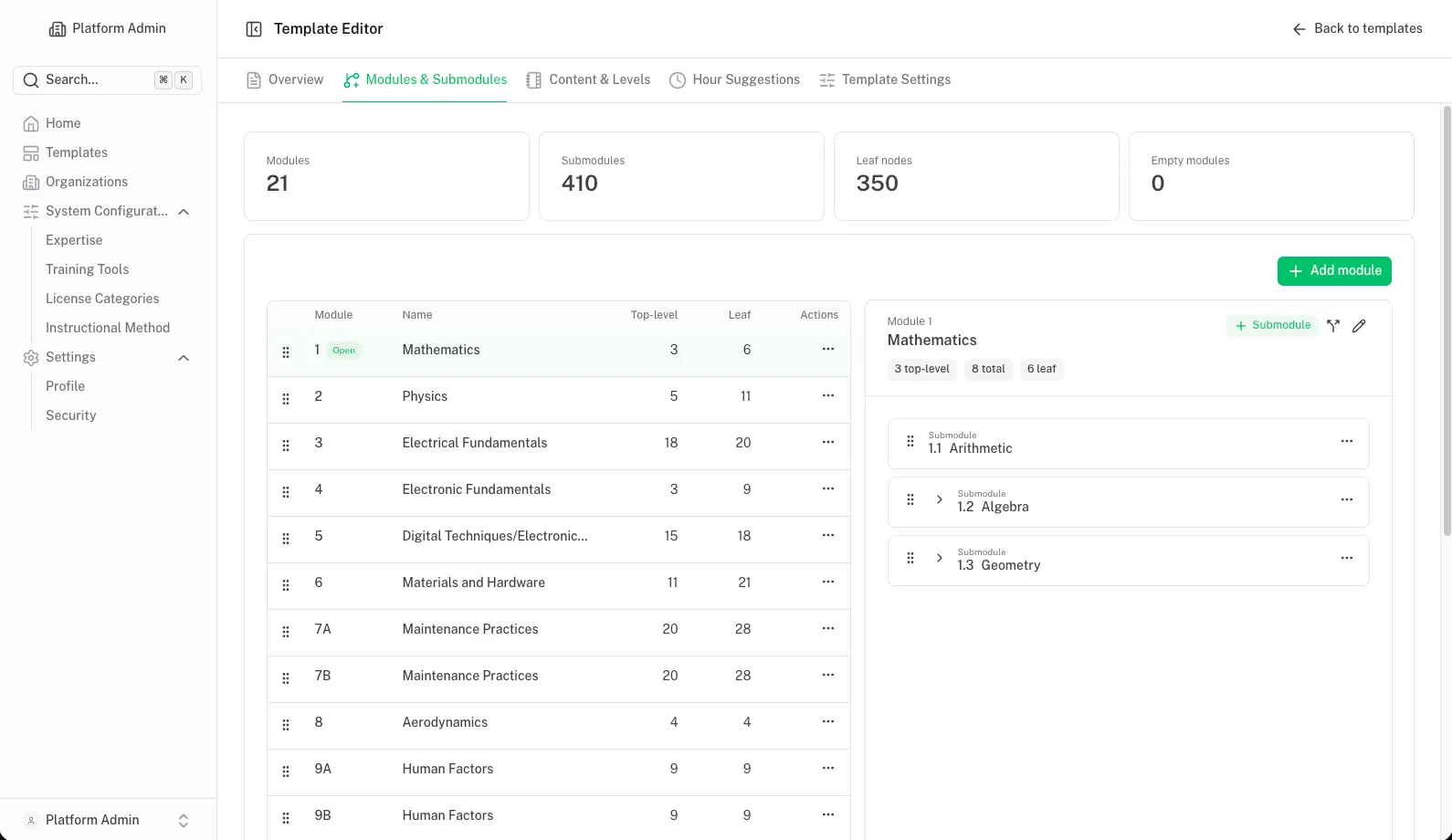
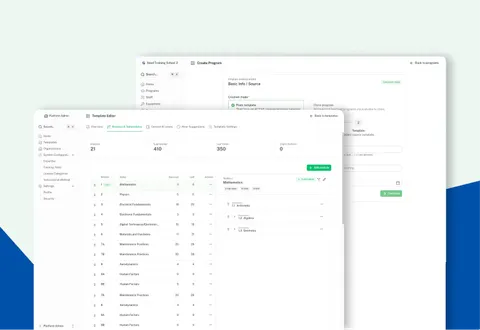
The heart of the platform is the Hour Manager, an Excel-style grid where Training Managers enter theoretical, practical and on-the-job training hours for every element of the curriculum. Required hours are set on the lowest-level submodule while practical hours can be aggregated at module level, and a floating summary panel validates compliance as you type: at least 2,400 total hours for basic training and a theoretical share held between 50% and 60%. The master template editor behind it — shown here managing 21 modules and 410 submodules — organizes the syllabus as a three-level drag-and-drop tree, and allocations export to native Excel files matching real aviation authority audit templates.
Program Creation Wizard
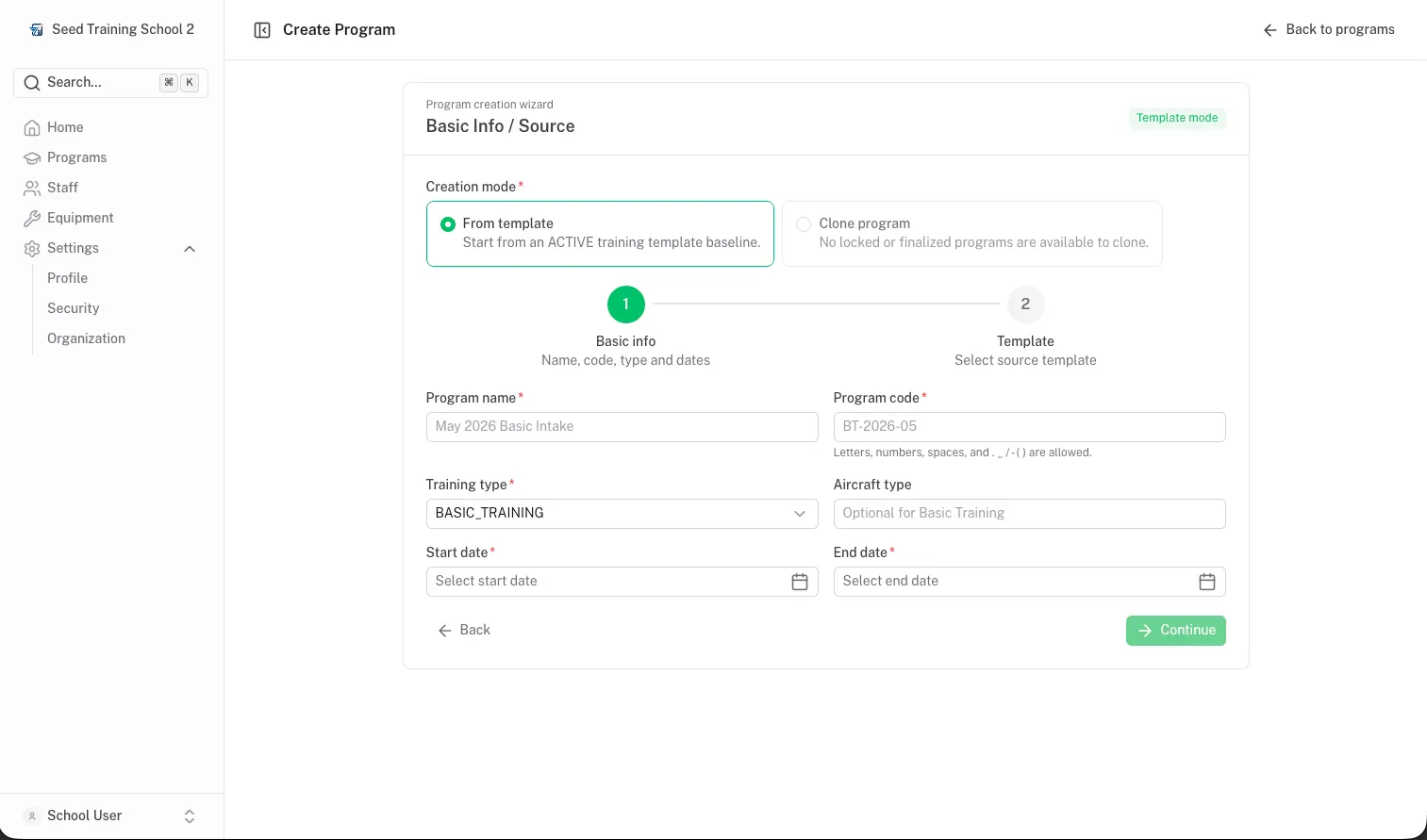
A step-by-step wizard turns a master template into a school's actual training program. Basic training follows EASA's Modules 1 to 17 in a module, submodule and sub-submodule hierarchy, while type training is structured by ATA chapters 00–85 for specific aircraft models. Schools can split modules into variants such as 7A and 7B or hide chapters that do not apply, and configure their own regulatory authority — EASA, UK CAA, CAAT or CAAS. Once a program is submitted and approved, a state machine locks it — Draft, Submitted, Approved, Locked — so no curriculum can silently change after regulatory approval.
Multi-Tenant Platform Administration
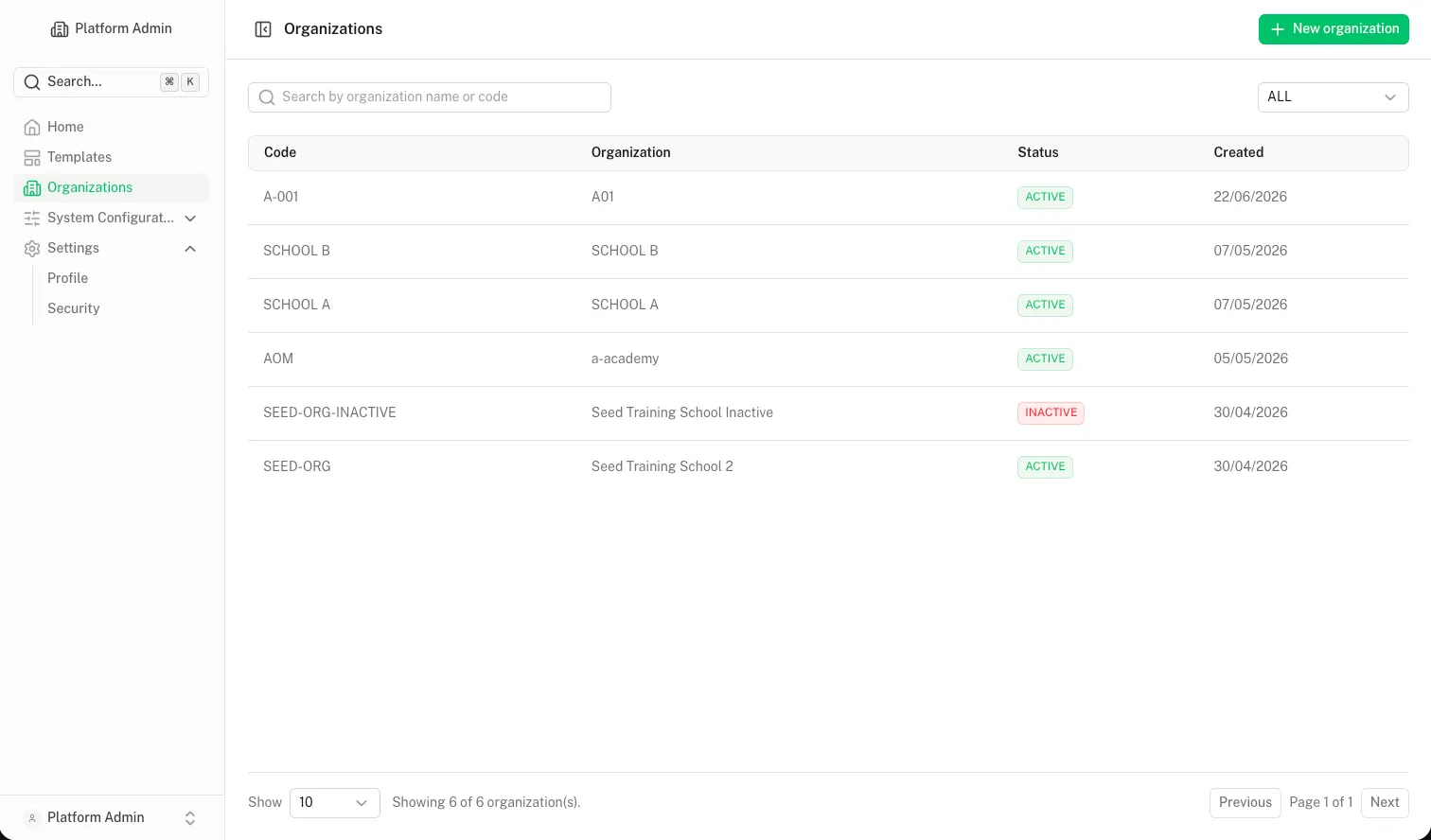
147 Manager runs as a multi-tenant SaaS: every training organization operates in an isolated tenant with its own personnel directory, programs and settings, managed from a platform administration console. Each school assigns four roles — Accountable Manager, Training Manager, Instructor and Office Staff — with permissions matched to their responsibilities, and instructors receive unique two-letter abbreviations to keep dense hour grids readable. Access is protected by Auth.js row-level tenancy isolation, two-factor authentication and per-organization IP whitelisting that restricts admin logins to approved network locations, on independent, dedicated DigitalOcean hosting.
Configurable Instructional Methods & Digital Sign-Off
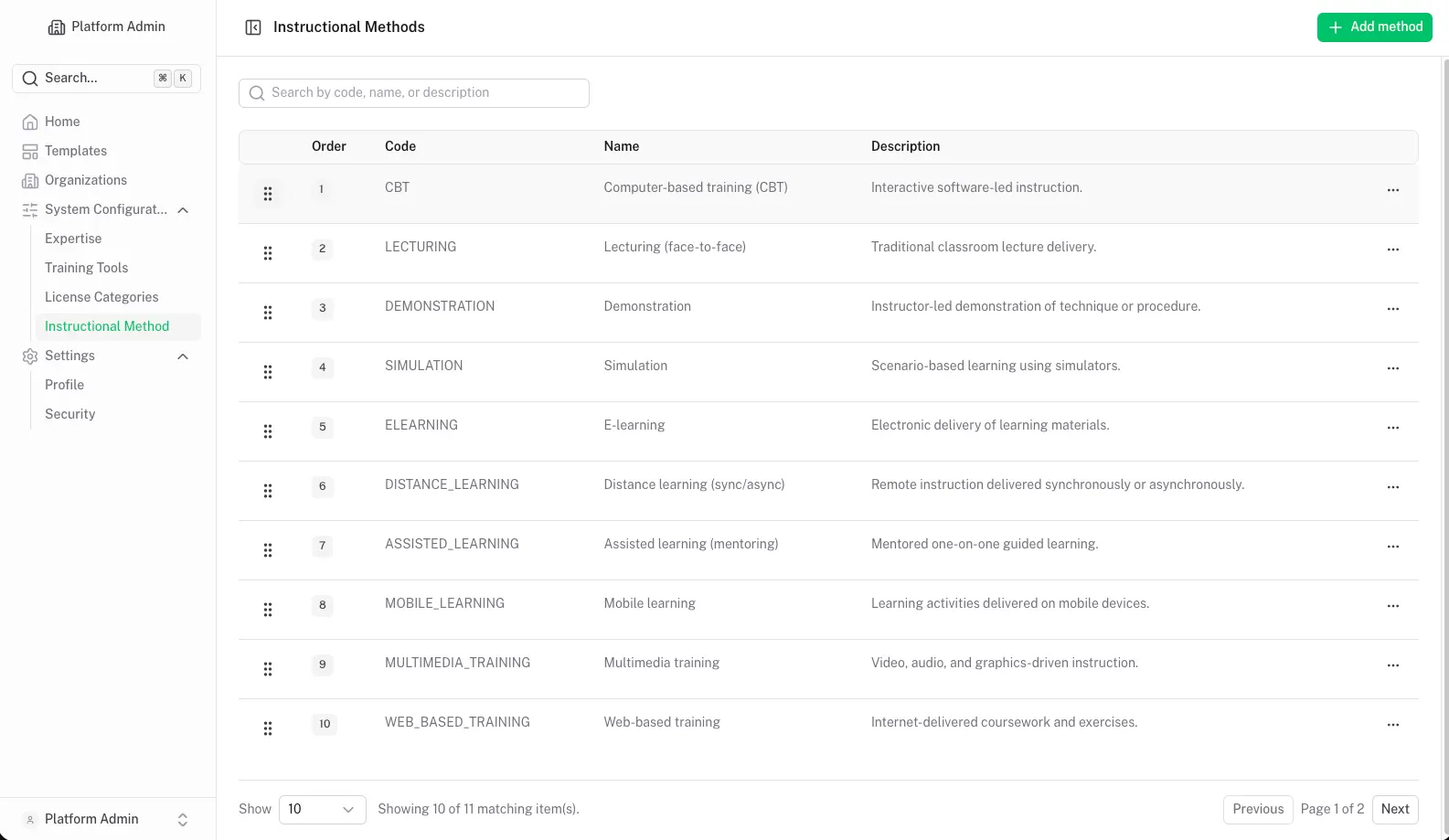
Digital instructor guides replace the traditional paper binder. Learning outcomes and knowledge levels are pre-filled from the master syllabus, and the topics covered in class are organized as structured key points: instructors digitally sign each individual key point, producing a delivery record precise enough for government audits. Teaching materials are linked to 16 pre-defined EASA standard instructional tools, from slideshows and manuals to virtual simulators, mock-ups and real aircraft components. Next on the roadmap: a visual classroom calendar with room assignments, an engine that detects instructor scheduling conflicts, and instructor mobile apps — Android first — with offline logging.
Where this project sits in our history
- 2019
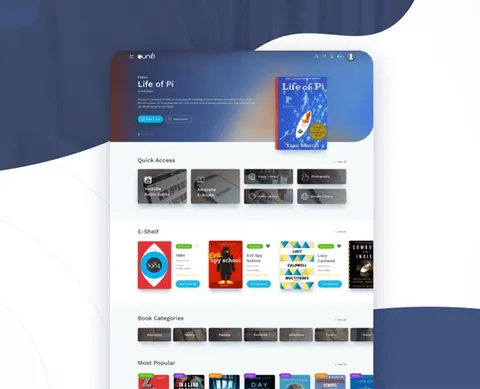 Ounifi (Thailand)E-books library digital ecosystem
 - 2021
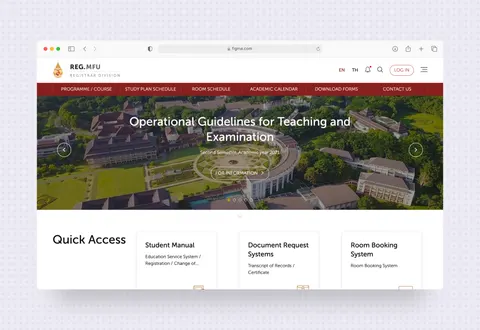 Mae Fah Luang Universitye-Registrar for University students
  2021Mae Fah Luang UniversityA University Statistics Dashboard
- 2022
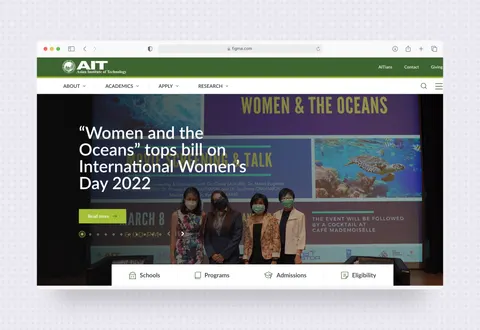 Asian Institute of TechnologyUniversity Website Redesign
 - 2025
 Mae Fah Luang University (Chiang Rai, Thailand)A Unified Mobile Access Layer for University Operations
 - 2026
 Total Training Support Ltd (UK)Multi-Tenant Exam Management Platform for Aviation Training
  2026Total Training Support Ltd (UK)E-Learning & Membership Platform for Aircraft Maintenance Training
 2026Total Training Support Ltd (UK)Training Program & Compliance SaaS for Aviation Maintenance SchoolsYou are here
 2026Australian govtech platformVenue Booking & Compliance SaaS for Local Governments
Contact us
Let’s find the right solution for your business.
We partner with product teams and founders to design, build, and ship software that lasts.
Talk to our team