


Nitro
A portable full-stack server framework for API routes, server rendering, storage and deployment across runtimes.
Nitro is the server framework behind Nuxt and can also power standalone full-stack TypeScript applications. It combines file-based API routing, optimized builds and deployment presets so one server codebase can target Node.js, serverless and edge environments.
The server engine behind modern Nuxt applications
Nitro is a full-stack server framework with filesystem routing, code splitting and built-in support for storage, caching and databases. It powers the server side of Nuxt and can also be used independently with Vite-based applications.
For a full-stack Nuxt product, Nitro lets the team define server routes and API endpoints in the same repository as the application. Shared TypeScript types and deployment configuration reduce context switching without forcing the browser-facing interface and server logic into the same security boundary.
Production proof: aviation training compliance
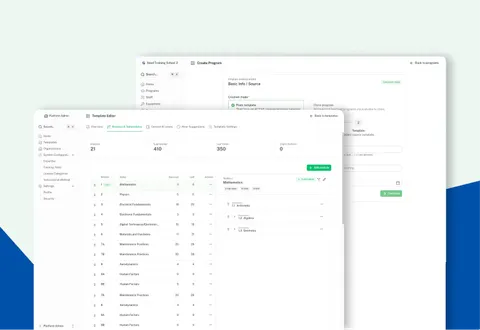
We use a Nuxt/Nitro backend for 147 Manager, a multi-tenant SaaS for aviation maintenance training organizations. The platform models regulatory curriculum structures, hour allocations, role-based workflows and audit-ready compliance documents, with Prisma ORM managing the relational data layer.
Nitro handles the application’s API routing and server architecture while allowing the product to be deployed on dedicated DigitalOcean infrastructure. This gives the team a unified TypeScript stack without giving up clear backend responsibilities.
Why we choose Nitro
Nitro is particularly useful when a project needs:
- server routes integrated naturally into a Nuxt or Vite codebase
- an optimized production output rather than a development server promoted to production
- deployment flexibility across Node.js, serverless or edge targets
- server-side rendering and API endpoints in one build system
- configurable caching, storage and scheduled server tasks
- a gradual path from a frontend application to a focused full-stack product
Architecture still comes first
A unified repository does not mean every business capability belongs in one server. We maintain explicit API boundaries, validation, authorization and database ownership. Large integration domains, independent scaling requirements or specialized workloads may still justify separate Node.js, Symfony or Python services.
Deployment portability also needs testing: different runtimes have different limits for filesystem access, execution time, connections and background work. We choose a target first, then verify that the Nitro architecture fits its operational constraints.
Nitro, Nuxt and Prisma
For current TypeScript SaaS projects, a common Outsourcify stack is Nuxt for the application interface, Nitro for server routes and rendering, and Prisma for relational data access. The combination keeps types close to the domain while each layer retains a clear purpose.
If you are evaluating a Nuxt full-stack architecture or migrating an Express backend into Nitro, contact our engineering team.
This technology, year by year
From our blog & guides

Agility Isn’t Dead. It’s Finally Becoming Real
A concept we never fully adopted—until now For years, “Agile” has been one of the most overused terms in our industry. It became a label more than a reality, often reduced to rituals: sprints, stand-ups, grooming sessions, velocity tracking. The promise was speed and adaptability, but in practice, many teams ended up with structured cycles… View Article
Read more →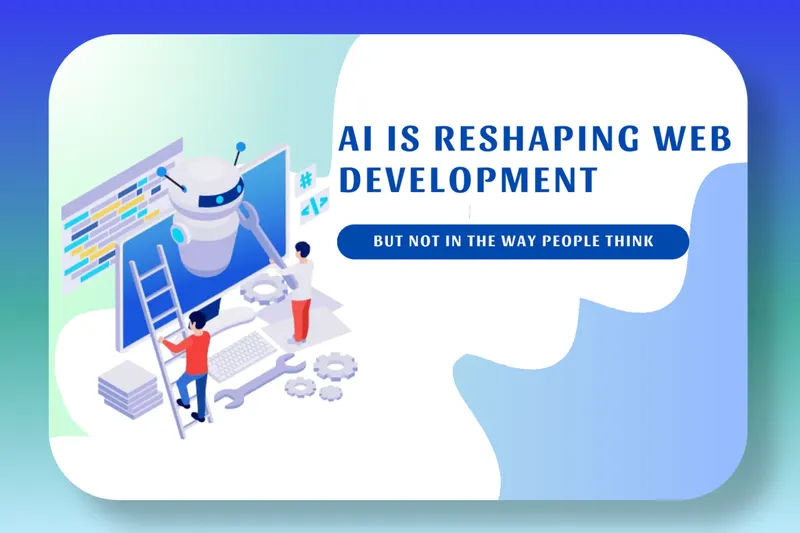
AI Is Reshaping Web Development — But Not in the Way People Think
Artificial intelligence is currently one of the most discussed topics in the technology industry. In web development, the dominant narrative often suggests that AI will replace developers and dramatically reduce the need for engineering teams. From what we observe in practice at Outsourcify, the reality is very different. AI is not replacing developers. Instead, it… View Article
Read more →
Will AI Replace Developers? A Reality Check From the Field
Artificial Intelligence has rapidly become the central topic of discussion in the technology industry. Every week seems to bring new announcements about AI models, AI agents, and predictions about how the technology will reshape the global economy. Some commentators claim that AI will soon replace large portions of the professional workforce, including software engineers. Others… View Article
Read more →Contact us
Let’s find the right solution for your business.
We partner with product teams and founders to design, build, and ship software that lasts.
Talk to our team