Which payment gateway is best in Thailand?
There is no single best payment gateway for every Thai business. Stripe is a strong developer-friendly option, while Opn Payments, 2C2P, Xendit and Pay Solutions offer deeper local payment coverage. The right choice depends on PromptPay and wallet support, transaction volume, payout terms, currencies, technical integration and Thai-language support.
| Business need | Options worth comparing | What to verify |
|---|---|---|
| Local Thai checkout | Opn Payments, 2C2P, Xendit, Pay Solutions | PromptPay, bank apps, wallets and THB payouts |
| Developer-friendly APIs | Stripe, Opn Payments, Xendit | Documentation, webhooks, test environments and plugins |
| International customers | Stripe, PayPal, 2C2P | Currencies, cross-border fees and card acceptance |
| TrueMoney-heavy audience | TrueMoney and gateways supporting its wallet | Merchant eligibility and checkout experience |
The Growing World of E-commerce Payments in Thailand
Thailand’s online shopping market is booming. It’s growing incredibly fast, making it one of the most exciting digital economies in Southeast Asia. This rapid growth means that choosing the right way to accept online payments is super important for any business wanting to succeed here. Plus, a lot of online shopping in Thailand involves customers from other countries, so payment systems need to handle different currencies easily.
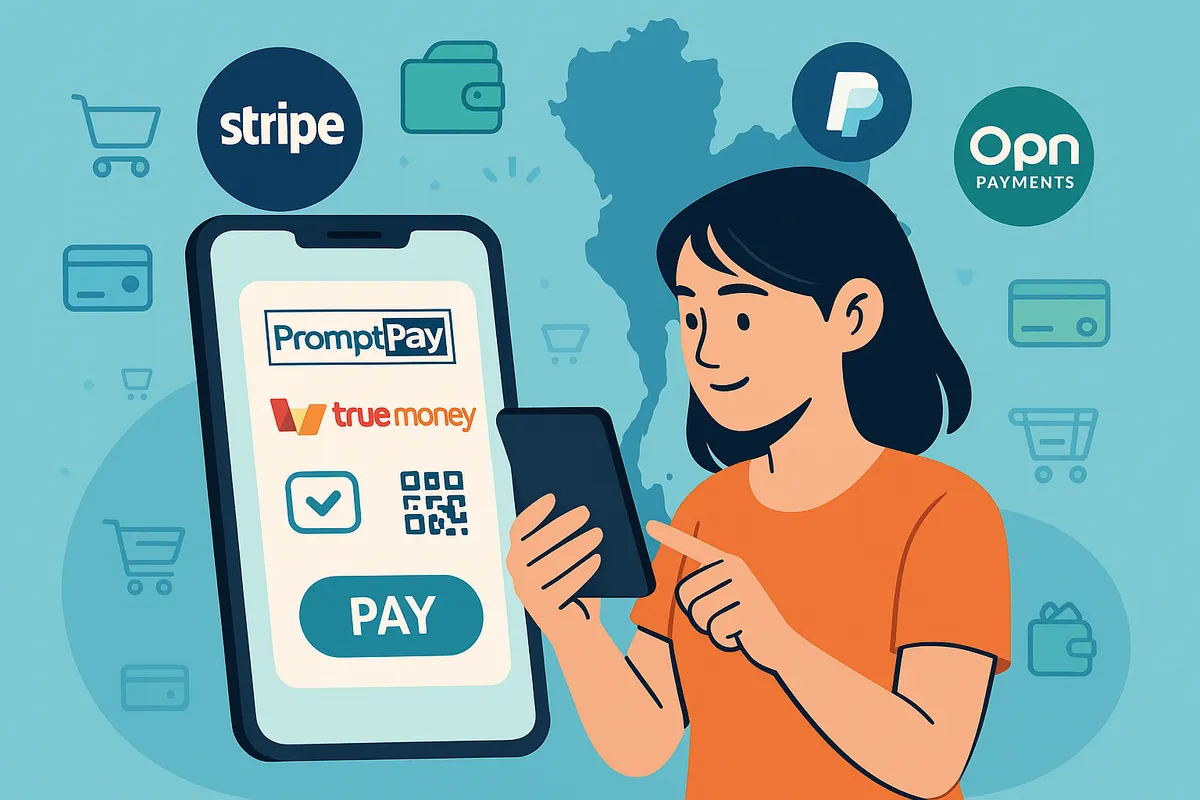
Woman using mobile payment apps, including PromptPay.
Digital Payments Are Taking Over
While cash was traditionally popular in Thailand, there’s now a significant shift towards digital payments. The government actively supports this transition, pushing for a nearly cashless society by 2028.
Thai customers mostly shop online using mobile phones, so it’s essential for e-commerce websites to offer a simple mobile payment experience. Popular methods include:
- PromptPay: A widely-used method linked to phone numbers or IDs, favored for its simplicity and low fees.
- Digital Wallets: TrueMoney, Rabbit LINE Pay, ShopeePay, and others are quickly growing in popularity, especially with younger users.
- Bank Transfers & Mobile Banking: Almost everyone has a bank account, making bank transfers and mobile banking apps like K PLUS and SCB Easy highly convenient.
- QR Codes: Often used with PromptPay or wallets, QR codes are a common payment method both online and in physical stores.
- Credit/Debit Cards: Cards remain important, especially for international or larger purchases, but are less common for everyday local transactions.
- Buy Now, Pay Later (BNPL): Flexible payment options like Atome and Grab PayLater are growing fast, allowing customers to buy immediately and pay in installments.
Why Your Payment Gateway Matters
The payment gateway you choose significantly impacts:
- User Experience: Easy payment options reduce shopping cart abandonment.
- Efficiency: Simple integration and reliable payments save time and resources.
- Security: Strong security features protect your business and build customer trust.
- Market Expansion: Supporting multiple currencies and international payments opens your store to global customers.
Thailand’s Top Online Payment Gateways
Thailand has a mix of global, regional, and local payment gateways. Here’s an overview of the major players:
- Stripe: Known worldwide, Stripe offers excellent integration tools and international payment support.
- Opn Payments (formerly Omise): A popular gateway with strong local knowledge, good security, and easy integration options.
- 2C2P: A large regional gateway specializing in a wide variety of payment options, ideal for bigger businesses.
- Xendit (previously GB Prime Pay): Combines regional and local strengths, particularly attractive to smaller businesses.
- Pay Solutions (formerly Thaiepay): Long-standing local gateway focused on Thai payment methods.
- PayPal: Well-known globally, useful for cross-border transactions but somewhat limited locally due to regulations.
- TrueMoney: Primarily known as a digital wallet, but also offers merchant payment solutions directly.
Choosing between global giants and local specialists depends on your target market and specific business needs.
Key Features of Popular Payment Gateways
Stripe
- Payments Supported: PromptPay, international cards, Apple Pay, Google Pay.
- Integration: Excellent tools for developers and pre-built e-commerce plugins.
- Security: Highly secure with advanced fraud detection.
- Support: 24/7 global support.
Opn Payments
- Payments Supported: PromptPay, wallets, mobile banking, international cards.
- Integration: Developer-friendly APIs and plugins.
- Security: Strong security and fraud protection.
- Support: Thai and English support available.
2C2P
- Payments Supported: Extensive local and international payment options including wallets and BNPL.
- Integration: Suitable for larger businesses with comprehensive integration options.
- Security: Certified secure with advanced fraud protection.
- Support: Local support for businesses.
Xendit
- Payments Supported: Popular local wallets, PromptPay, cards.
- Integration: Easy plugins for popular e-commerce platforms.
- Security: Meets international security standards.
- Support: Local Thai support channels.
Pay Solutions
- Payments Supported: Local wallets, PromptPay, cards, mobile banking.
- Integration: User-friendly with easy plugins and direct payment links.
- Security: Compliant with international security standards.
- Support: Strong local support.
PayPal
- Payments Supported: Mainly international transactions through PayPal balance and cards.
- Integration: Varied integration tools but limited local payment methods.
- Security: High security with buyer/seller protection.
- Support: Global support, including Thai language.
TrueMoney
- Payments Supported: TrueMoney wallet primarily.
- Integration: Direct merchant integration with CRM and payout features.
- Security: Secure payment processing.
- Support: 24-hour support available.
Published pricing examples (checked July 2026)
Gateway costs include transaction fees, fixed charges, VAT, payouts and optional services. These published examples were checked against provider pricing pages in July 2026:
- Stripe: standard Thailand pricing lists domestic cards at 3.65% + ฿10, international cards at 4.75% + ฿10, and PromptPay at 1.65%.
- Opn Payments / Omise: Thailand pricing lists cards at 3.65% and PromptPay at 1.65%, excluding 7% VAT.
- 2C2P: merchant pricing is generally supplied as part of a commercial proposal rather than a simple public standard rate.
- Xendit: its Thailand pricing calculator lists local cards at 3.20% + ฿10 and PromptPay QR at 0.80%, before VAT.
- Pay Solutions: request a current merchant quotation covering cards, PromptPay, wallets, payouts and VAT.
- PayPal: Thailand merchant fees list domestic commercial transactions at 3.90% plus a fixed fee, with higher cross-border rates.
- TrueMoney: merchant fees vary by business category and agreement; confirm the applicable rate during onboarding.
Pricing can change and custom volume rates may differ. Confirm the final commercial terms with each provider before choosing or implementing a gateway.
Choosing Your Ideal Payment Gateway: Tips for Thai Businesses
Picking the best payment gateway involves matching your business needs with what’s available in Thailand. There isn’t one “perfect” choice for everyone; it depends on your size, customers, technical skills, and budget.
Think About Your Business:
- Size and Sales Volume: Smaller businesses often prefer gateways with clear, pay-as-you-go pricing and no fixed costs, like Stripe, Opn Payments, Xendit, or Pay Solutions. Larger companies doing lots of transactions might benefit from custom deals offered by providers like 2C2P, even if pricing isn’t public.
- Customers (Local vs. Global): If you mainly sell within Thailand, you must choose a gateway that fully supports local favorites like PromptPay, TrueMoney, and mobile banking apps. Opn Payments, 2C2P, Xendit, and Pay Solutions are generally strong here. If you sell a lot internationally, look for strong cross-border features, multi-currency support, and wide international card acceptance (like Stripe, PayPal, 2C2P).
- Tech Savviness: If you have limited tech resources, look for gateways with easy-to-use plugins for your e-commerce platform (like Shopify or WooCommerce) or simple options like Payment Links (offered by Stripe and Pay Solutions). If you have developers, they can use the powerful tools (APIs) from gateways like Stripe or Opn Payments for custom solutions.
- Budget: Look beyond just the transaction percentage. Consider the total cost, including any setup or monthly fees, charges for disputes or refunds, payout costs, and currency conversion fees. Don’t forget to factor in the 7% VAT if it’s not included in the quoted price.
Key Things to Compare:
When you have a shortlist, focus on these points:
- Local Payment Options: Check for support for the specific wallets and bank apps your Thai customers use most (TrueMoney, LINE Pay, K PLUS, etc.). How easy is it for customers to use these options?
- Easy Setup: Does it integrate well with your website platform? Is the documentation clear and support helpful?
- Customer Support: Can you get help when you need it? Is support available in Thai? Good local support is really valuable.
- Getting Paid: Does the payout schedule (daily, weekly, etc.) fit your cash flow needs?
- Security: Does it offer strong fraud protection beyond the basics? How does it help with payment disputes?
- Clear Pricing: Is the pricing easy to understand and predict? If it’s custom pricing, make sure everything is clearly written down.
Thinking Ahead
Thailand’s digital payment scene changes fast, thanks to government pushes, new tech, and changing habits (like the rise of BNPL). Choose a provider that is committed to the Thai market, keeps up with rule changes, and plans to add new payment methods. This helps ensure your payment system stays useful as the market evolves.
Frequently Asked Questions
Does Stripe support PromptPay in Thailand?
Stripe lists PromptPay as a supported payment method for eligible Thailand accounts. Confirm current eligibility, settlement details and pricing for your business directly with Stripe before implementation.
What payment methods should a Thai online store offer?
Most Thai stores should evaluate PromptPay, credit and debit cards, mobile banking and the wallets their specific customers use. International stores may also need multi-currency card payments and a cross-border option such as PayPal.
How should payment gateway fees be compared?
Compare the total cost, not only the headline transaction percentage. Include setup or monthly charges, VAT, refunds, disputes, payouts, currency conversion, cross-border payments and any fees for specific local methods.
Can one website use more than one payment gateway?
Yes. A business may combine gateways to cover local methods, international cards or fallback processing. The additional coverage must be weighed against more complex reconciliation, refunds, monitoring and checkout maintenance.
Conclusion: Choosing a Payment Gateway for Thailand
Choosing the right online payment gateway is a critical step for any e-commerce business tapping into Thailand’s booming digital market. As we’ve seen, there’s a wide range of options, from global giants like Stripe and PayPal to strong regional and local players like Opn Payments, 2C2P, Xendit, and Pay Solutions.
The best choice depends entirely on your business needs. Key things to consider are: offering the local payment methods Thai customers love (like PromptPay and popular e-wallets), ensuring a smooth mobile experience, balancing global reach with local know-how, how easy it is to integrate technically, and understanding the total cost involved.
Don’t overlook factors like the quality of customer support (especially in Thai), how quickly and reliably you get your money (in THB), and the provider’s commitment to security and adapting to new rules. These make a big difference in the long run.
No single gateway is perfect for everyone. By carefully thinking about your business, customers, technical abilities, and budget, and comparing them against the services and general pricing approaches outlined here, you can make a smart choice that helps your Thai e-commerce business grow. Always double-check the latest details and fees directly with the providers before making a final decision.
Disclaimer: The information in this article is based on research from publicly available sources up to mid-2025. Service details and general pricing approaches can change. Businesses should always do their own research and confirm current offerings directly with payment gateway providers.
Need help integrating your chosen payment gateway or building your e-commerce site for Thailand? Outsourcify offers expert development services. Contact us to see how we can help you succeed.