Building a successful B2B product isn’t just about launching innovative features; it’s about laying a robust foundation that can withstand growth, evolving customer needs, and compliance requirements. Many critical architectural and design choices seem minor at the beginning, but if overlooked, they become major roadblocks later.
At Outsourcify, we’ve seen this repeatedly when taking over projects. That’s why we help our clients make the right technical decisions early on. Even when developing a Minimum Viable Product (MVP), we design it with the future in mind. We never build throwaway MVPs; every MVP we deliver can evolve into the final product. That means thinking ahead on certain fundamentals that cost very little to implement up front but can save months of painful rework later.
Below are eight key areas where foresight pays off.
Key Takeaways for Enduring B2B Product Design:
- Strategic Foundations: Proactive decisions on user/organization separation, RBAC, and multi-tenancy are paramount for scalability and security.
- Data Integrity & Control: Prioritizing auditability, data ownership, and seamless import/export capabilities fosters trust and compliance.
- Future-Proofing & Flexibility: API-first design and feature flagging ensure adaptability, integration potential, and efficient tier management.
Establishing Core Architectural Principles
The very first steps in your product’s journey dictate its long-term stability and capacity for growth. These initial architectural decisions are often overlooked but are crucial for avoiding future technical debt and ensuring a smooth scaling trajectory.
They are just as important when building an MVP: thinking ahead on a few fundamentals doesn’t necessarily mean more development work, but it can save months of rework later.
1. Separate Users and Organizations
In B2B software, users rarely operate in isolation. Most products revolve around organizations—companies, teams, or departments. Defining “organization” as a first-class entity from day one, and linking users to it with an orgID, sets the stage for critical features such as seat-based billing, enterprise SSO, and team permissions.
At Outsourcify, we always create this separation early. It might look like a trivial database decision, but implementing it later often requires extensive refactoring.
2. Role-Based Access Control (RBAC)
Hardcoding permissions directly into features may seem quicker, but it quickly becomes unsustainable. A simple Role-Based Access Control (RBAC) model—defining roles such as Admin, Editor, or Viewer—ensures flexibility and security.
With RBAC in place, onboarding, offboarding, and permission audits become manageable. Many of our enterprise clients require this from the start, and when it’s already built in, it’s easy to extend with more granular roles later.
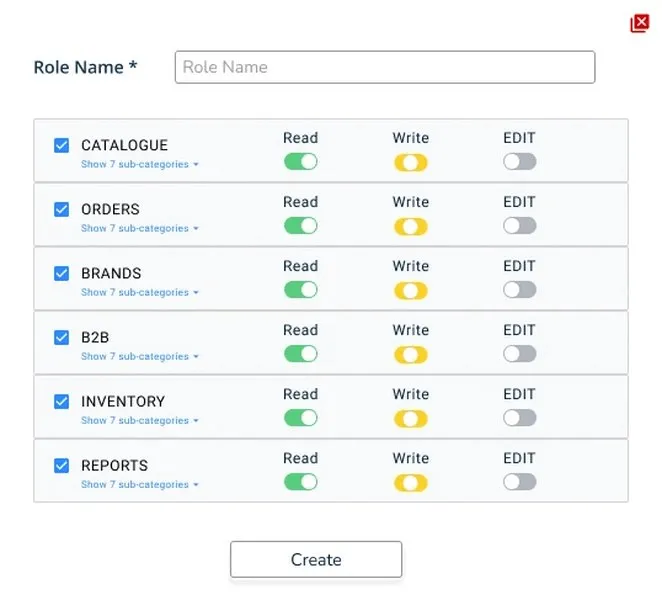
An example illustrating the hierarchical structure typically seen in Role-Based Access Control systems.
Why RBAC is Non-Negotiable:
- Enhanced Security: Limits access to sensitive data and functionalities to only those who need it.
- Simplified Management: Makes it easier to onboard, offboard, and manage user permissions at scale.
- Compliance: Essential for meeting various regulatory requirements that demand strict access controls.
- Auditability: Works hand-in-hand with audit logs to show who had access to what at any given time.
3. Auditability and Logging
“Who did what, and when?” is a fundamental question in B2B environments. Audit logs provide the answer. They’re essential for compliance (GDPR, SOC 2), for troubleshooting, and for customer support.
At Outsourcify, we recommend implementing structured logging from day one. It’s inexpensive early, but costly to retrofit once your client base has grown.
4. Multi-Tenancy Strategy
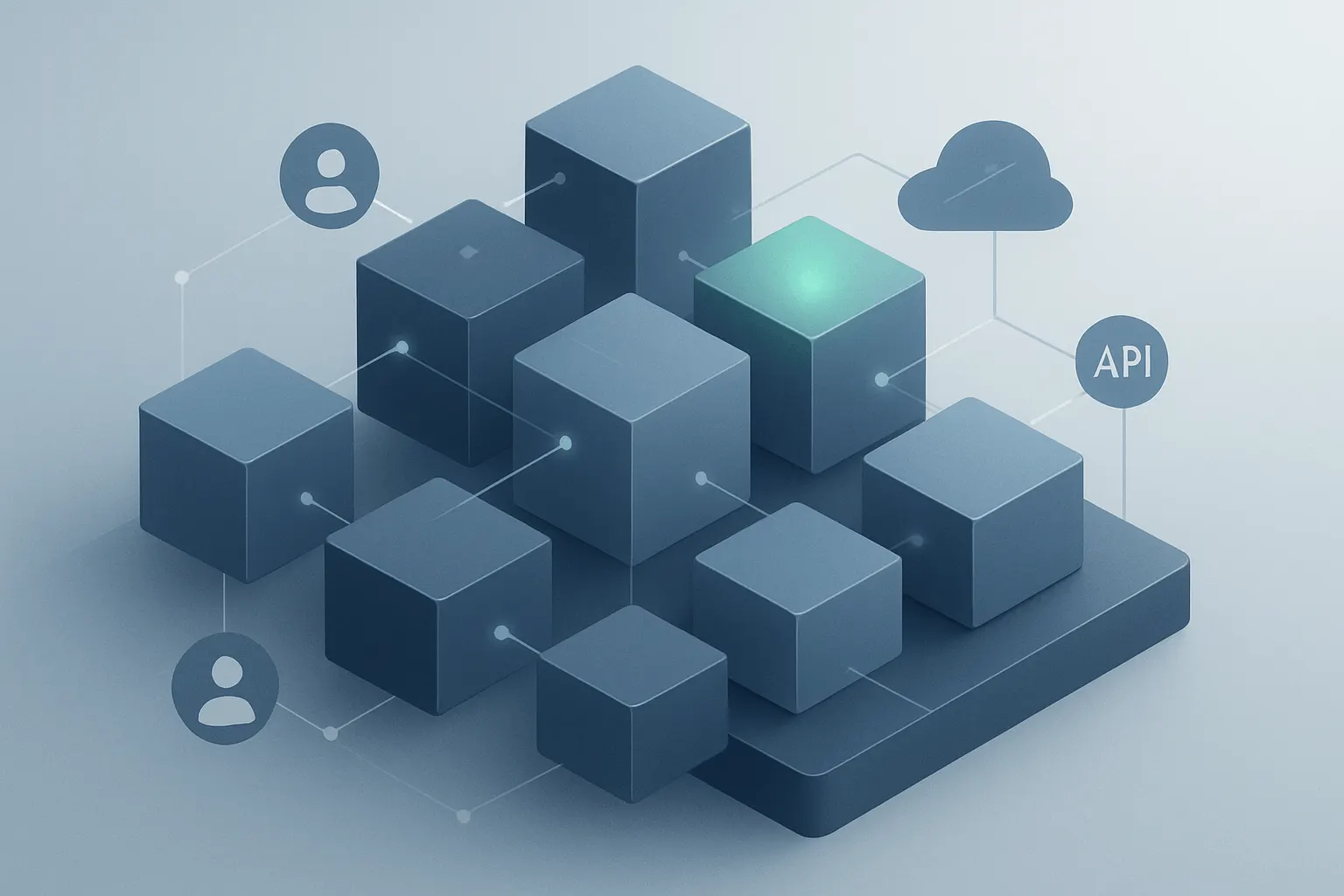
How your product serves multiple organizations (tenants) is a foundational architectural decision that impacts everything from data isolation and security to performance and cost. Decide early on your multi-tenancy strategy: whether each organization gets its own database, a separate schema within a shared database, or if all data resides in a shared database partitioned by an orgId field. Each approach has trade-offs:
- Separate Databases: Offers the highest data isolation and security, but can be more resource-intensive and complex to manage at scale.
- Separate Schemas: Provides good isolation with less overhead than separate databases, suitable for many B2B applications.
- Shared Database with orgId: Most cost-effective and easiest to manage initially, but requires careful implementation to prevent data leakage and ensure query performance for large tenants.
This decision is critical because changing your multi-tenancy model later can be a monumental and costly undertaking, requiring significant data migration and application re-architecture.
Prioritizing Data Management and Control
In the B2B world, data is king, and respecting its ownership and ensuring its integrity are paramount. These practices not only build trust with your clients but also shield you from legal and operational pitfalls.
5. Ensuring Auditability with Comprehensive Logging
A robust audit log is your product’s memory. From day one, implement a system that records “who did what, when, and with what result.” This includes tracking user actions (e.g., creating a record, updating a setting, deleting data), system events, and API calls. Audit logs are invaluable for:
- Troubleshooting: Quickly identifying the source of issues or unexpected behavior.
- Security Investigations: Tracing suspicious activities and understanding potential breaches.
- Compliance: Meeting regulatory requirements (e.g., GDPR, SOC 2) that demand a verifiable history of data access and changes.
- Customer Support: Providing detailed context when customers report problems or ask about past actions.
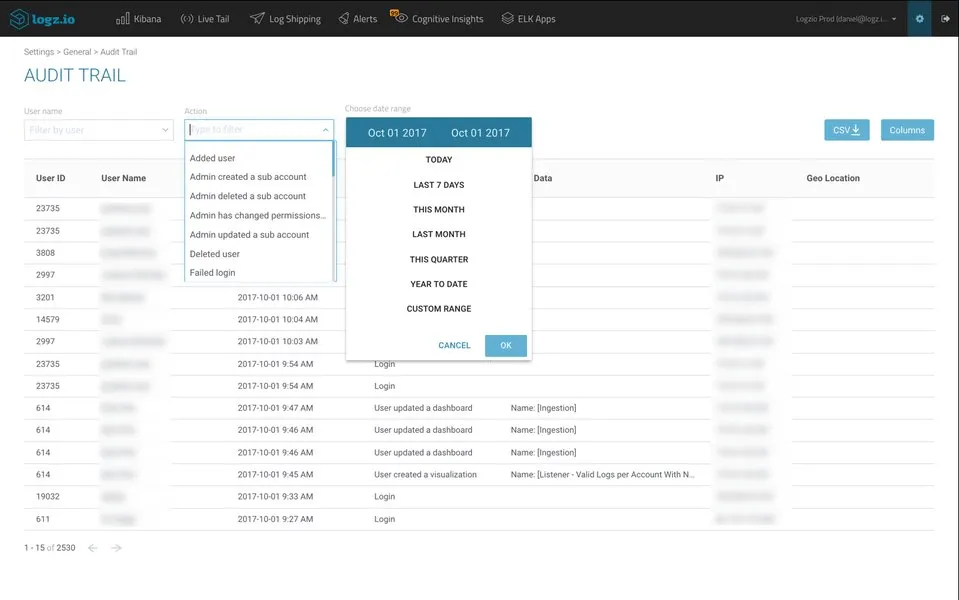
A typical audit log interface displaying user actions and associated timestamps, crucial for traceability.
6. Respecting Data Ownership: Easy Export and Deletion
Your B2B clients own their data, and your product must reflect that fundamental principle. Design and build features that allow organizations to easily export all their data in common, machine-readable formats (e.g., CSV, JSON, Excel) and, equally important, to securely delete their data. This isn’t just a compliance checkbox (think GDPR, CCPA); it’s a critical trust-builder. Enabling self-service data management prevents legal complications, simplifies customer offboarding, and demonstrates respect for client autonomy. Retrofitting data export and deletion capabilities later can be technically challenging and operationally costly.
At Outsourcify, we design systems so that data can be exported in standard formats (CSV, JSON, Excel) and deleted cleanly at the organization level. This makes onboarding and offboarding smoother and reduces legal and operational risks.
7. Planning for Data Migration and Imports
New clients often bring existing data from legacy systems or spreadsheets. Your product needs robust capabilities for data migration and imports from day one. Support common formats like CSV and Excel, and consider API-driven import options. Design these features to be resilient, with clear error reporting and idempotent behavior to handle partial failures or retries. Easy and reliable data onboarding is a significant factor in client adoption and satisfaction. Without it, you’ll spend valuable engineering resources on one-off scripts and manual data wrangling, leading to frustrated customers and delayed time-to-value.
We help our clients plan for migration pipelines early—supporting CSV, Excel, and API-based imports—so onboarding is fast, reliable, and repeatable.
Building for Extensibility and Agility
A B2B product doesn’t exist in a vacuum. It must integrate with other systems and adapt to changing market demands. Designing for extensibility and agility from the outset ensures your product remains relevant and competitive.
8. Designing with APIs from Day One
In the connected B2B landscape, an API-first approach is no longer optional. Treat every feature you build as an API first, even if it’s primarily consumed by your own GUI. This means developing stable, well-documented APIs with clear contracts and versioning. An API-first strategy:
- Enables Integrations: Facilitates seamless connections with other software in your clients’ ecosystems.
- Accelerates Adoption: Makes it easier for clients to embed your product’s capabilities into their workflows.
- Fosters Ecosystem Growth: Opens doors for partners to build on top of your platform.
- Future-Proofs: Ensures your product can evolve and adapt without requiring costly rewrites for every new integration.
Attempting to bolt on a comprehensive API layer later is often a complex and time-consuming endeavor that can delay critical partnerships and product evolution.
At Outsourcify, we build APIs alongside the product itself. Our own front-ends consume the same APIs we expose to partners and clients, ensuring consistency and future-proofing.
9. Leveraging Feature Flagging and Entitlements for Client Tiers
Managing different subscription tiers, feature sets, and experimental rollouts can quickly become a nightmare without the right tools. Implement feature flags and an entitlement system early on. This allows you to dynamically enable or disable features based on a client’s subscription level, specific contracts, or even for A/B testing. Benefits include:
- Flexibility: Easily tailor product experiences for different customer segments without branching your codebase.
- Safe Experimentation: Test new features with a subset of users before a full rollout.
- Efficient Upgrades: Seamlessly upgrade or downgrade client access to features without code deployments.
- Reduced Risk: Quickly roll back problematic features without impacting the entire user base.
This approach decouples product development from commercial agreements, providing immense agility and reducing the operational burden of managing varied client offerings.
Summary of Foundational Best Practices
Below is a concise table summarizing the key foundational practices for B2B product development and their long-term benefits:
| Foundational Practice | Why It Matters (Early Benefit) | Pain if Ignored (Later Consequence) |
|---|---|---|
| Separate Users & Organizations | Clear data segregation; simplifies permissions & billing. | Data integrity nightmares; complex permission logic. |
| Simple RBAC Model | Controls access proactively; improves security posture. | Security vulnerabilities; difficult to retrofit access control. |
| Comprehensive Audit Logs | Enables troubleshooting; supports compliance & security. | Inability to trace actions; compliance failures; costly investigations. |
| Multi-Tenancy Strategy | Optimizes scalability, isolation, and cost structure. | Massive, costly data re-architecture; performance issues. |
| Data Export & Deletion | Builds client trust; ensures regulatory compliance. | Legal complications; customer dissatisfaction; retention issues. |
| Data Migration & Imports | Streamlines customer onboarding; reduces manual effort. | Slow customer adoption; continuous manual data fixes. |
| API-First Design | Enables seamless integrations; fosters ecosystem growth. | Limited interoperability; costly retroactive API development. |
| Feature Flagging & Entitlements | Flexible feature management; supports tiered offerings. | Complex code branching; slow feature rollouts; rigid pricing. |
The table above serves as a quick reference for the essential “day one” practices, highlighting both their immediate value and the severe repercussions of neglecting them. These decisions are not merely technical checkboxes; they are strategic investments in your product’s future success, resilience, and customer satisfaction.
Outsourcify’s Approach: MVPs That Last
It’s true that not every MVP needs all these features on day one. But some of them—like separating users and organizations, or deciding your multi-tenancy strategy—are too critical to postpone. At Outsourcify, we always build MVPs designed to evolve. Our goal is never to throw away code and start over, but to deliver a foundation that grows into a production-ready product.
By making smart architectural decisions early, you save not only time and money, but also ensure your product can scale, integrate, and meet the needs of enterprise clients.
Conclusion
The difference between a B2B product that scales smoothly and one that collapses under technical debt often comes down to these early decisions. Separating users and organizations, implementing RBAC, planning for auditability, and choosing a multi-tenancy model are not just “nice to haves”—they’re investments in your product’s future.
At Outsourcify, we combine technical expertise with practical experience to guide our clients through these decisions from day one. The result? B2B products that grow with their users, meet compliance requirements, and stay competitive in evolving markets.